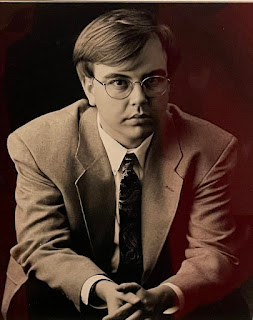
I attended a screening of Star Trek: Into Darkness last night that was followed by a Q&A with composer Michael Giacchino and producer Bryan Burk. During the Q&A, Giacchino spoke of his process, saying that what he does is translate his emotional responses to whatever movie or TV show he's composing for into the music. This got me to thinking.
Do we serve as emotional ambassadors to our audiences? Is it our job to have an emotional response to a story, and translate that response into a physical form: as music, performance, direction, design, even the writing of the story? Are we in fact being paid, not just to tell a story, but to have an emotional response to the story we tell?
Sunday, May 19, 2013
Saturday, May 18, 2013
Kill Me
The Visceral Company presents the Los Angeles premiere of a play by Scott T. Barsotti.
review by Andrew Moore
Some works of art disturb you, dominate your thoughts, haunt you. Kill Me has the potential to dig its hooks into an audience's psyche, and The Visceral Company's production of this difficult piece very nearly achieves this end. The flaws in the production are significant but not fatal. Kill Me is an intense, suspenseful evening of theater that fans of psychological horror should seek out.
The play opens with a great bit of John McCormick's sound design over blackout, followed by the lyrical pyrotechnics of overlapping dialogue. The audience is injected into the world of the play with immediacy and intensity. Cam (an earnest and committed Natasha Charles Parker) emerges from a life--and sanity--altering experience. Her estranged sister Wendy (Angela Stern) and lover Grace (Jonica Patella) struggle to understand her and help her heal. Cam is haunted by the Miseries, four actors who embody Paranoia, Dread, Despair, and Angst.
Kill Me is a gripping glimpse into schizophrenia; into the horror of living with someone who is so convinced by the reality of her delusions, her loved ones begin to believe as well. It is about the potential contagion of mental illness, and the frightening possibility that the ravings of a lunatic may be prophetic and true. Playwright Scott T. Barsotti has painted a compelling picture. There are moments so ... well, moments so visceral, they are almost impossible to process on a logical level.
The problem is there is no build to these moments. Patella in particular is cranked up pretty high on the intensity scale from the beginning, with nowhere really to go. Even at Grace's weakest, most vulnerable moments she continues with full intensity. Ultimately, it cheats the depth her final moment onstage should have. That's unfortunate, because her journey is the most interesting of the three main characters. Director Dan Spurgeon needs to find the peaks and valleys and exploit them with his actors. Otherwise, it's just an onslaught.
There are other opportunities here that remain unexploited. Given the nature of the dialogue, the fluidity of the scenes, and the dreamlike quality of the show overall it is dismaying that Spurgeon opted for rather static blocking throughout. The choices Spurgeon made lead to awkward transitions at times. For instance, the Miseries are forced to retreat in full view of the audience after particularly feverish interaction with an actor. Slinking backwards to the wings. There is no proper ebb to the flow.
Regarding the Miseries, designers Erica D. Schwartz (costumes) and Jana Wimer (makeup) made very bold and specific choices in their depiction of the Miseries, which is a good thing. However the Miseries feel out of sync with this piece, as if they were characters from another play who happened in to this one. They are just distracting enough at times to work against the mood that is being created.
Despite the problems I found with the production, I greatly enjoyed it. The commitment of the cast, the quality of the production values, and the script itself are all wonderful, and perhaps you will leave it as I did, pondering the themes at play and wondering just how crazy Cam actually was. This company is fully committed to its mission statement by bringing suspenseful and frightening works to the Los Angeles theatre scene, and they definitely succeed with that aim.
Kill Me is at The Lex Theatre Friday and Saturday evenings at 8pm, and Sundays at 3pm through June 2nd. Tickets are $20 and may be purchased through www.thevisceralcompany.com. The Lex Theatre is located at 6760 Lexington Ave. in Hollywood California, just off Highland. Parking can be a challenge, so get there a little early and pay attention to the signs.
This play contains intense and frightening imagery, including graphic makeup effects. Leave the kids at home.
review by Andrew Moore
Some works of art disturb you, dominate your thoughts, haunt you. Kill Me has the potential to dig its hooks into an audience's psyche, and The Visceral Company's production of this difficult piece very nearly achieves this end. The flaws in the production are significant but not fatal. Kill Me is an intense, suspenseful evening of theater that fans of psychological horror should seek out.
The play opens with a great bit of John McCormick's sound design over blackout, followed by the lyrical pyrotechnics of overlapping dialogue. The audience is injected into the world of the play with immediacy and intensity. Cam (an earnest and committed Natasha Charles Parker) emerges from a life--and sanity--altering experience. Her estranged sister Wendy (Angela Stern) and lover Grace (Jonica Patella) struggle to understand her and help her heal. Cam is haunted by the Miseries, four actors who embody Paranoia, Dread, Despair, and Angst.
Kill Me is a gripping glimpse into schizophrenia; into the horror of living with someone who is so convinced by the reality of her delusions, her loved ones begin to believe as well. It is about the potential contagion of mental illness, and the frightening possibility that the ravings of a lunatic may be prophetic and true. Playwright Scott T. Barsotti has painted a compelling picture. There are moments so ... well, moments so visceral, they are almost impossible to process on a logical level.
The problem is there is no build to these moments. Patella in particular is cranked up pretty high on the intensity scale from the beginning, with nowhere really to go. Even at Grace's weakest, most vulnerable moments she continues with full intensity. Ultimately, it cheats the depth her final moment onstage should have. That's unfortunate, because her journey is the most interesting of the three main characters. Director Dan Spurgeon needs to find the peaks and valleys and exploit them with his actors. Otherwise, it's just an onslaught.
There are other opportunities here that remain unexploited. Given the nature of the dialogue, the fluidity of the scenes, and the dreamlike quality of the show overall it is dismaying that Spurgeon opted for rather static blocking throughout. The choices Spurgeon made lead to awkward transitions at times. For instance, the Miseries are forced to retreat in full view of the audience after particularly feverish interaction with an actor. Slinking backwards to the wings. There is no proper ebb to the flow.
Regarding the Miseries, designers Erica D. Schwartz (costumes) and Jana Wimer (makeup) made very bold and specific choices in their depiction of the Miseries, which is a good thing. However the Miseries feel out of sync with this piece, as if they were characters from another play who happened in to this one. They are just distracting enough at times to work against the mood that is being created.
Despite the problems I found with the production, I greatly enjoyed it. The commitment of the cast, the quality of the production values, and the script itself are all wonderful, and perhaps you will leave it as I did, pondering the themes at play and wondering just how crazy Cam actually was. This company is fully committed to its mission statement by bringing suspenseful and frightening works to the Los Angeles theatre scene, and they definitely succeed with that aim.
Kill Me is at The Lex Theatre Friday and Saturday evenings at 8pm, and Sundays at 3pm through June 2nd. Tickets are $20 and may be purchased through www.thevisceralcompany.com. The Lex Theatre is located at 6760 Lexington Ave. in Hollywood California, just off Highland. Parking can be a challenge, so get there a little early and pay attention to the signs.
This play contains intense and frightening imagery, including graphic makeup effects. Leave the kids at home.
Thursday, May 09, 2013
Hemophelia's House of Horrors
Presented by The Visceral Company
review by Andrew Moore
The Visceral Company presents a frightfully fun excursion into laugh-out-loud funny horror; an eclectic collection of sketches that range from macabre jokes to horror movie satire, with occasional artistic and technical flourishes that elevate this from being a mere sketch comedy show to something truly worth seeing.
Lara Fisher is Hemophelia, our host, our sexy Crypt Keeper-ette. She fills the space between the sketches with songs (Matt DeNoto has composed some truly funny stuff here) and goriously bad puns, but most importantly keeps the show moving along. Her name is in the title, but Hemophelia (like all good emcees) knows the show isn't just about her. We get just enough of her dark wackiness that we want more.
"Habeus Corpus," created and directed by Jana Wimer, is a trippy piece of puppetry magic. A disembodied head and hands dig through a trash can, pulling out bits and pieces of garbage to assemble a body. Spooky and fun with a startling ending. Like "Organ Grinder," it's not the sort of fare you would expect in a sketch show, but the otherworldly eeriness contributes to the overall vibe of the night.
"Karmic Retribution" exemplifies what this troupe is capable of with straight up sketch comedy. A genre-twisting take on the "axe-wielding maniac" trope, three survivors lock themselves in a cabin and let their true feelings be known about a fourth friend who was slaughtered offstage. Casey Christensen, Cloie Wyatt Taylor, and Cynthia Zitter play up the imperiled campers, giving a more dimensional portrayal of the victim archetypes from conventional horror. The piece builds tension through its staging, releasing bits of that tension through humor until the grim and hilarious end. It is delightful.
This show is a lot of fun, and I recommend braving the horrible parking to take it in. (Parking is a nightmare. Get there a little early, expect to do laps, and pay attention to the signs before committing to a spot. You may have to park a few blocks away from the venue.)
Hemophelia's House of Horrors opens its doors Fridays and Saturdays at 10:30 pm through June 8th (there are no performances on May 17th or 18th) and may also be visited during Hollywood Fringe Festival on Tuesday, June 11th at 8pm and Thursday, June 13th at 10:30pm. The Visceral Company is in residence at The Lex Theatre, 6760 Lexington Avenue in Hollywood. Nearest cross street is Highland.
Tickets are $15 via Brown Paper Tickets, but you may use the code "HEMO" at check-out for a $5 discount. More information may be found on The Visceral Company website.
review by Andrew Moore
![]() |
| Lara Fisher is Hemophelia, the ghoul of cool and hostess of Hemophelia's House of Horrors, an all-new horror-themed comedy/variety show now playing at the Lex Theatre through June 8. |
Lara Fisher is Hemophelia, our host, our sexy Crypt Keeper-ette. She fills the space between the sketches with songs (Matt DeNoto has composed some truly funny stuff here) and goriously bad puns, but most importantly keeps the show moving along. Her name is in the title, but Hemophelia (like all good emcees) knows the show isn't just about her. We get just enough of her dark wackiness that we want more.
"Habeus Corpus," created and directed by Jana Wimer, is a trippy piece of puppetry magic. A disembodied head and hands dig through a trash can, pulling out bits and pieces of garbage to assemble a body. Spooky and fun with a startling ending. Like "Organ Grinder," it's not the sort of fare you would expect in a sketch show, but the otherworldly eeriness contributes to the overall vibe of the night.
"Karmic Retribution" exemplifies what this troupe is capable of with straight up sketch comedy. A genre-twisting take on the "axe-wielding maniac" trope, three survivors lock themselves in a cabin and let their true feelings be known about a fourth friend who was slaughtered offstage. Casey Christensen, Cloie Wyatt Taylor, and Cynthia Zitter play up the imperiled campers, giving a more dimensional portrayal of the victim archetypes from conventional horror. The piece builds tension through its staging, releasing bits of that tension through humor until the grim and hilarious end. It is delightful.
This show is a lot of fun, and I recommend braving the horrible parking to take it in. (Parking is a nightmare. Get there a little early, expect to do laps, and pay attention to the signs before committing to a spot. You may have to park a few blocks away from the venue.)
Hemophelia's House of Horrors opens its doors Fridays and Saturdays at 10:30 pm through June 8th (there are no performances on May 17th or 18th) and may also be visited during Hollywood Fringe Festival on Tuesday, June 11th at 8pm and Thursday, June 13th at 10:30pm. The Visceral Company is in residence at The Lex Theatre, 6760 Lexington Avenue in Hollywood. Nearest cross street is Highland.
Tickets are $15 via Brown Paper Tickets, but you may use the code "HEMO" at check-out for a $5 discount. More information may be found on The Visceral Company website.
Tuesday, April 30, 2013
Autopsy of a Deceased Theater
As Scott Walters (formerly blogging at Theatre Ideas, now blogging at Creative Insubordination) once opined:
The 11 lessons outlined may be of particular interest to folks who find themselves concerned for the health of their theater company. It should be read by all, regardless, as the items listed sketch out a road map for failure that may be avoided. Let's take a look at just three of these items.
For me the analogy is creative leadership turnover. When a company begins chewing up and spitting out its creative talent, you might want to start warming up the defibrillator.
Correct me if I'm wrong, but isn't that precisely what theater is good at?
What if we thought of theatre not as a product, but as an alliance (a "connection based on kinship, marriage, or common interest; a bond or tie"), a fellowship (a "close association of friends or equals sharing similar interests"), a guild (an "association of persons of the same trade or pursuits, formed to protect mutual interests and maintain standards"). Instead of buying a product (a ticket to a show), you became a member of this alliance/fellowship/guild and could participate in all of the activities associated with that organization. A church can serve as an interesting model.Indeed, a church is a fantastic model, which is why I sat up in my chair a bit when my dad -- a Methodist minister -- posted a link to this article on Facebook:
The 11 lessons outlined may be of particular interest to folks who find themselves concerned for the health of their theater company. It should be read by all, regardless, as the items listed sketch out a road map for failure that may be avoided. Let's take a look at just three of these items.
2. The church had no community-focused ministries. This part of the autopsy may seem to be stating the obvious, but I wanted to be certain. My friend affirmed my suspicions. There was no attempt to reach the community.Can you imagine a theater company becoming calcified and insular? Acting -- banish the thought -- cliquish? (Note: you have to focus on the community you actually belong to, not the community you wish you belonged to. This is often a key distinction for companies in Los Angeles.)
7. With few exceptions, pastoral tenure grew shorter and shorter. The church had seven pastors in its final ten years. The last three pastors were bi-vocational. All of the seven pastors left discouraged.
9. The church had no clarity as to why it existed. There was no vision, no mission, and no purpose.And herein lies a clue to the cure. A dying company lacks purpose. Say, I haven't quoted Peter Brook in a while, have I? This seems like a good time to do so. From The Empty Space:
There is always a new season in hand and we are too busy to ask the only vital question which measures the whole structure. Why theatre at all? What for? Is it an anachronism, a superannuated oddity, surviving like an old monument or a quaint custom? Why do we applaud, and what? Has the stage a real place in our lives? What function can it have? What could it serve? What could it explore? What are its special properties?Granted, the cure involves asking tough questions and coming up with challenging answers.
Correct me if I'm wrong, but isn't that precisely what theater is good at?
Monday, April 29, 2013
How to Tell When it's Time to Cut Bait
Barring any last minute inspiration, this will be the last post in our "Won't Get Fooled Again" series of posts this month. To celebrate the spirit of April Fools Day, we've taken a look at Meeting Trolls, the importance of knowing your rights, creating sustainable fun, and how to work with a partner or collaborator. Today we look at the flip side of this last topic:
When a collaboration or partnership clicks, the whole becomes greater than the sum of the parts. Some amazing art can be created. Sometimes, things go horribly awry. It is incredibly hard to tell how bad things really are when you are in the middle of things. Before settling down, you should spend some time "dating" to see if a partnership or collaboration is a love connection. Work on a limited project with your potential collaborators, and evaluate the experience from a safe distance before committing further.
Hopefully, this list will help you recognize the signs of a bad creative relationship so that you can move on and find your perfect match. Or, if you have settled down, perhaps it will help you resist doubling down on a partnership that's driving you nuts.
1. SANDBAGGING. Important information is being withheld. One of your collaborators knows something you don't, and in order to gain some advantage over you, he keeps you in the dark. If you are being sandbagged, you are not in a healthy relationship; you are connected to someone who is actively working against you in a passive-aggressive, underhanded way.
This is reason enough to pack it in and hit the road. This is a basic trust issue. If your partner or collaborators are doing this to you, run.
2. STATED MISSION VS. THE ACTUAL ACTIVITIES. This is not the same as making an honest attempt and failing. No, this is saying one thing and doing another. For instance the stated goal is to develop new material, but the group only seems interested in producing published plays that will showcase the actors.
We all have our wild hares to chase, but when things get wildly out of phase and most of the time, something more serious is at hand.
3. YOUR GOALS VS. THE GOALS OF YOUR COLLABORATORS. This is a big one, yet it's strangely easy to miss. It's really a "no harm, no foul" situation -- you're just not all on the same page. You want to create spontaneous happenings in public, someone else wants to produce Shakespeare in the park, and a third person wants to produce her one-woman show in a North Hollywood storefront theater.
This can lead to "No, but ..." brainstorming, as opposed to "Yes, and ...." Every idea thrown out is immediately shot down by someone who's just not on the same page with you. You're planning a garden salad, he's planning to change the oil in his Buick Skylark. "Carrots!" "No, Pennzoil 10W30!" "No, celery!" "No, Fram HM3887A oil filter!" If it feels like you're speaking a different language than your collaborator, you probably are.
4. ALL STICK, NO CARROT. Sometimes we need enforcement to get things done. The enforcement of a deadline, for instance. If you are in a creative relationship that is all enforcement and no positive reinforcement (e.g. rewards, opportunities, a simple "thank you"), you are most likely dealing with someone who gets off on pushing other people around. The world is too vast, and creative opportunities too ample to remain attached to a bruiser who'd rather smack you than pat you on the back.
5. FOCUSING ON BLAME RATHER THAN PRODUCTION. Ever have one of those meetings where you deviate wildly off of the agenda and into finger-pointing territory? Any hope for productivity flies out the window and you spend the next hour rehashing things that went astray -- rehashing without any attempt to actually learn from those mistakes. Nope, it's much more fun to tell a person, "You're wrong!"
This gets really sick when it becomes a proactive attempt to catch you out on something. To actually manipulate you into an unintentional lie or misstep; a game of "GOTCHA!"
6. FREQUENT CLASHES, ESPECIALLY OF A PERSONAL NATURE. This is an extension of the above, and it deserves its own bullet. There's blaming others for things that have gone wrong, and then there's taking personal potshots at them. If it's happening, again, the person you're dealing with is actively working against you. Nothing good can come of that relationship. Run.
7. DRUDGERY. Finally, if you're just plain miserable, cut bait and move on.
It can be tough. There's this thing called "The Sunk Cost Bias." There's a great article about it here. The short version is, it's damned hard to step away from something you've invested in. For some reason it feels "better" to keep doubling down on a bad hand than to simply fold. This is what Buddha meant when he said "The origin of suffering is attachment."
To paraphrase Walt Whitman, you are large; you contain multitudes. Don't let anyone sell you on the idea that leaving a messed-up relationship will in anyway hinder your ability to create. Instead, remember the sage words of Bobcat Goldthwait:
How to Tell When it's Time to Cut Bait
When a collaboration or partnership clicks, the whole becomes greater than the sum of the parts. Some amazing art can be created. Sometimes, things go horribly awry. It is incredibly hard to tell how bad things really are when you are in the middle of things. Before settling down, you should spend some time "dating" to see if a partnership or collaboration is a love connection. Work on a limited project with your potential collaborators, and evaluate the experience from a safe distance before committing further.
Hopefully, this list will help you recognize the signs of a bad creative relationship so that you can move on and find your perfect match. Or, if you have settled down, perhaps it will help you resist doubling down on a partnership that's driving you nuts.
1. SANDBAGGING. Important information is being withheld. One of your collaborators knows something you don't, and in order to gain some advantage over you, he keeps you in the dark. If you are being sandbagged, you are not in a healthy relationship; you are connected to someone who is actively working against you in a passive-aggressive, underhanded way.
This is reason enough to pack it in and hit the road. This is a basic trust issue. If your partner or collaborators are doing this to you, run.
2. STATED MISSION VS. THE ACTUAL ACTIVITIES. This is not the same as making an honest attempt and failing. No, this is saying one thing and doing another. For instance the stated goal is to develop new material, but the group only seems interested in producing published plays that will showcase the actors.
We all have our wild hares to chase, but when things get wildly out of phase and most of the time, something more serious is at hand.
3. YOUR GOALS VS. THE GOALS OF YOUR COLLABORATORS. This is a big one, yet it's strangely easy to miss. It's really a "no harm, no foul" situation -- you're just not all on the same page. You want to create spontaneous happenings in public, someone else wants to produce Shakespeare in the park, and a third person wants to produce her one-woman show in a North Hollywood storefront theater.
This can lead to "No, but ..." brainstorming, as opposed to "Yes, and ...." Every idea thrown out is immediately shot down by someone who's just not on the same page with you. You're planning a garden salad, he's planning to change the oil in his Buick Skylark. "Carrots!" "No, Pennzoil 10W30!" "No, celery!" "No, Fram HM3887A oil filter!" If it feels like you're speaking a different language than your collaborator, you probably are.
4. ALL STICK, NO CARROT. Sometimes we need enforcement to get things done. The enforcement of a deadline, for instance. If you are in a creative relationship that is all enforcement and no positive reinforcement (e.g. rewards, opportunities, a simple "thank you"), you are most likely dealing with someone who gets off on pushing other people around. The world is too vast, and creative opportunities too ample to remain attached to a bruiser who'd rather smack you than pat you on the back.
5. FOCUSING ON BLAME RATHER THAN PRODUCTION. Ever have one of those meetings where you deviate wildly off of the agenda and into finger-pointing territory? Any hope for productivity flies out the window and you spend the next hour rehashing things that went astray -- rehashing without any attempt to actually learn from those mistakes. Nope, it's much more fun to tell a person, "You're wrong!"
This gets really sick when it becomes a proactive attempt to catch you out on something. To actually manipulate you into an unintentional lie or misstep; a game of "GOTCHA!"
6. FREQUENT CLASHES, ESPECIALLY OF A PERSONAL NATURE. This is an extension of the above, and it deserves its own bullet. There's blaming others for things that have gone wrong, and then there's taking personal potshots at them. If it's happening, again, the person you're dealing with is actively working against you. Nothing good can come of that relationship. Run.
7. DRUDGERY. Finally, if you're just plain miserable, cut bait and move on.
It can be tough. There's this thing called "The Sunk Cost Bias." There's a great article about it here. The short version is, it's damned hard to step away from something you've invested in. For some reason it feels "better" to keep doubling down on a bad hand than to simply fold. This is what Buddha meant when he said "The origin of suffering is attachment."
To paraphrase Walt Whitman, you are large; you contain multitudes. Don't let anyone sell you on the idea that leaving a messed-up relationship will in anyway hinder your ability to create. Instead, remember the sage words of Bobcat Goldthwait:
Work with your friends. Avoid chasing fame or money. Just do what you want to do, when and how you want to do it. And if it’s not making you happy, quit. Quit hard, and quit often. Eventually you’ll end up somewhere that you never want to leave.
The Importance of Outlining
As for the story, whether the [writer] takes it ready made or constructs it for himself, he should first sketch its general outline, and then fill in the episodes and amplify in detail.The older I get, the more I appreciate the notion that all writing is not simply rewriting (as the old saying goes) but rather all writing is rewriting and pre-writing.
- Aristotle, The Poetics
Tuesday, April 23, 2013
Red Bastard
Sacred Fools Spotlight Presents the Adult Only Show
Review by Andrew Moore
There's a nagging little imp inside our minds that is telling us we could do more, accomplish more, be more. We try to shut him up with pills or alcohol or simply being "too busy," but he's there, waiting for an opportunity to rub our pathetic little failures in our face and say, "SEE? YOU WOULDN'T BE STUCK IN A DEAD-END LIFE IF YOU HAD JUST LISTENED TO ME IN THE FIRST PLACE!"
There's a reason why we keep him shut up in a mental broom closet, why we strive to keep his voice out of our heads. It's uncomfortable to be laughed at -- it's worse when it's us doing the laughing.
Red Bastard is that imp. His wild gymnastics and existential challenges are uncomfortable, but sorely needed.
This isn't entertainment; it's an experience. Eric Davis is entertaining -- please don't misunderstand. He is entrancing and vivacious as the eponymous bulbous buffoon. What I mean to say is this is not some mere show that you just go to see.
Brecht said, "Art is not a mirror to hold up to society, but a hammer with which to shape it." Red Bastard is the mirror and the hammer, and he empowers his audience to join him. He can't force his audience out of their comfort zone; they have to be willing to go on the journey with him. You do not have to be willing to trust him, per se, at least no more than you would trust yourself, but willing to play along. Willing to dance with the devil, as it were.
Does he succeed? It depends upon the audience, I suppose. He certainly gave me pause, and I've been rolling around the Red Bastard experience in my mind since last night's performance. Davis makes a valiant effort at being an agent provocateur and change agent, yet in spite of his monstrous posturing and the maniacal control he exercises over the audience, there is a very human vulnerability just under the surface of the monster. This spark of vulnerability lends a certain ineffable charm to Red Bastard, and provides a sense of safety no matter how risky the dance becomes. His performance hinges on an audience willing to play, and it is a courageous risk on his own part.
Go be a part of Red Bastard; be willing to play. Take the clown at face value and he will return the favor.
Red Bastard is seducing audiences Mondays at 8pm, but THERE ARE ONLY TWO PERFORMANCES LEFT! April 29th and May 13th, at Sacred Fools, 660 N. Heliotrope Dr., in Los Angeles; just south of Melrose and a couple of blocks west of Vermont Ave. Street parking is ample, but get there a little early. Tickets are $20 and available at www.sacredfools.org/onlineboxoffice/.
(Side note: Scoops, a groovy little gelato joint just north of Melrose on Heliotrope is open until 10:00 pm. After the show, take a little walk and try their salted caramel or jasmine pistachio. It's a tasty, decadent treat that pairs well with nursing your inner imp.)
Review by Andrew Moore
![]() |
| Photo via redbastard.com |
There's a nagging little imp inside our minds that is telling us we could do more, accomplish more, be more. We try to shut him up with pills or alcohol or simply being "too busy," but he's there, waiting for an opportunity to rub our pathetic little failures in our face and say, "SEE? YOU WOULDN'T BE STUCK IN A DEAD-END LIFE IF YOU HAD JUST LISTENED TO ME IN THE FIRST PLACE!"
There's a reason why we keep him shut up in a mental broom closet, why we strive to keep his voice out of our heads. It's uncomfortable to be laughed at -- it's worse when it's us doing the laughing.
Red Bastard is that imp. His wild gymnastics and existential challenges are uncomfortable, but sorely needed.
This isn't entertainment; it's an experience. Eric Davis is entertaining -- please don't misunderstand. He is entrancing and vivacious as the eponymous bulbous buffoon. What I mean to say is this is not some mere show that you just go to see.
Brecht said, "Art is not a mirror to hold up to society, but a hammer with which to shape it." Red Bastard is the mirror and the hammer, and he empowers his audience to join him. He can't force his audience out of their comfort zone; they have to be willing to go on the journey with him. You do not have to be willing to trust him, per se, at least no more than you would trust yourself, but willing to play along. Willing to dance with the devil, as it were.
Does he succeed? It depends upon the audience, I suppose. He certainly gave me pause, and I've been rolling around the Red Bastard experience in my mind since last night's performance. Davis makes a valiant effort at being an agent provocateur and change agent, yet in spite of his monstrous posturing and the maniacal control he exercises over the audience, there is a very human vulnerability just under the surface of the monster. This spark of vulnerability lends a certain ineffable charm to Red Bastard, and provides a sense of safety no matter how risky the dance becomes. His performance hinges on an audience willing to play, and it is a courageous risk on his own part.
Go be a part of Red Bastard; be willing to play. Take the clown at face value and he will return the favor.
Red Bastard is seducing audiences Mondays at 8pm, but THERE ARE ONLY TWO PERFORMANCES LEFT! April 29th and May 13th, at Sacred Fools, 660 N. Heliotrope Dr., in Los Angeles; just south of Melrose and a couple of blocks west of Vermont Ave. Street parking is ample, but get there a little early. Tickets are $20 and available at www.sacredfools.org/onlineboxoffice/.
(Side note: Scoops, a groovy little gelato joint just north of Melrose on Heliotrope is open until 10:00 pm. After the show, take a little walk and try their salted caramel or jasmine pistachio. It's a tasty, decadent treat that pairs well with nursing your inner imp.)
Subscribe to:
Posts (Atom)